Air Quality Management
The Environment Act 1995 introduced a system of local air quality management.
All local authorities have to periodically review and assess the current and likely future air quality in their areas against national air quality objectives for seven air pollutants.
The pollutants of concern are:
- Nitrogen dioxide
- Fine particles
- Sulphur dioxide
- Benzene
- 1,3 Butadiene
- Lead
- Polyaromatic hydrocarbons
- Ozone
- Carbon dioxide
Where any objective is unlikely to be met, local authorities must designate those areas as Air Quality Management Areas (AQMAs) and make Air Quality Action Plans (AQAPs), liaising with the local transport authority, to work towards meeting the objectives.
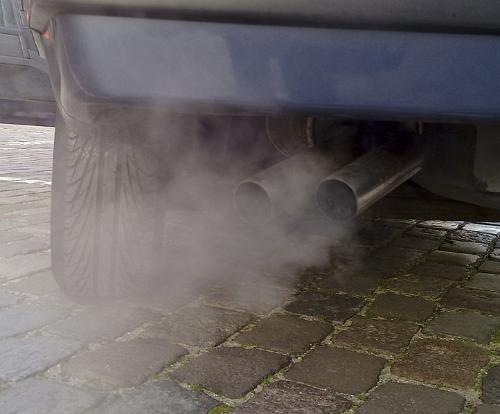
For Stratford-on-Avon the main source of air pollution is emissions from road traffic. The air quality annual mean objective for nitrogen dioxide was identified as being exceeded in areas dominated by traffic in Stratford upon Avon and Studley. This led to the declaration of two AQMAs.
We have developed new Air Quality Planning Guidance which was endorsed by The Cabinet in January 2019 and will inform the emerging Development Requirements SPD. Developers are required to put in place measures to minimise emissions from the development and, where necessary, offset the impact on the environment.
Monitoring for nitrogen dioxide continues within the AQMAs and is reported annually to Department for Environment, Food & Rural Affairs (DEFRA).
To increase public awareness, the Government issues daily air quality bulletins via the national media. These bulletins include health advice for those who may be especially affected by high concentrations of air pollutants.
For further information on air quality management, please contact Environmental Health:
- Email: envhealth@stratford-dc.gov.uk
- Telephone: 01789 267575
- Report it Online
Monitoring Air Quality
We currently have three AQ Mesh monitors. Two are located in Studley and Stratford Upon Avon, the third is a mobile pod which is currently located on Evesham Road, Stratford Upon Avon. These monitors are solar powered units that measure nitrogen dioxide, humidity, temperature and particular matter. Monitors are located within our Air Quality Management Areas (AQMAs). These locations are chosen to target areas where air pollution is expected to be high such as an area that experiences heavy traffic.
Click here to view these locations.
Click here to view the live monitoring data.
Domestic Bonfires
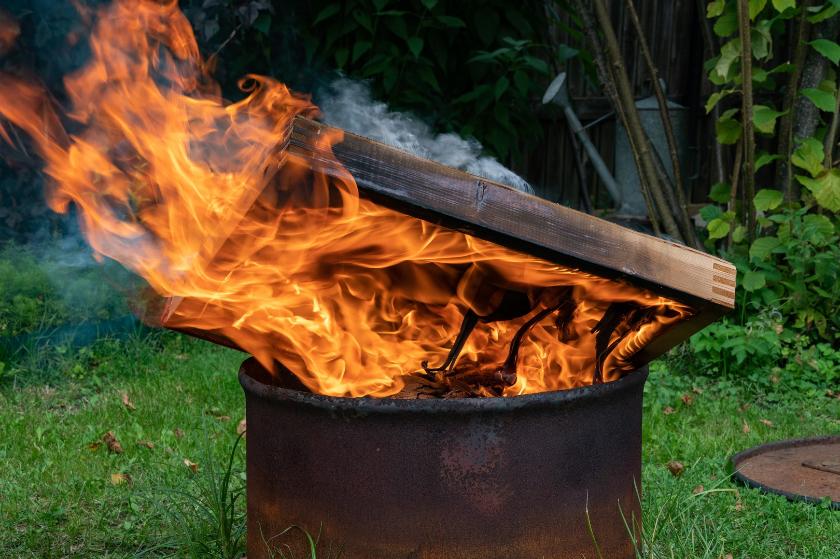
Under the Environmental Protection Act 1990 (EPA), a statutory nuisance includes "smoke, fumes or gases emitted from premises so as to be prejudicial to health or a nuisance" and exists when a bonfire is a regularly recurring problem and interferes substantially with nearby residents' "wellbeing, comfort or enjoyment of their property". If a bonfire is emitting dark or black smoke, it is dealt with under the Clean Air Act 1993 - this includes the burning of such material in your garden. Under the Act, it is illegal to dispose of waste that is not from your property on your property - for example from a workplace or neighbour - and small tradesmen must not burn waste from site at home.
Bonfire guidelines:
- Never leave a fire unattended.
- Only burn dry material.
- Never burn household waste, rubber tyres or anything containing plastic.
- Avoid lighting a fire in unsuitable weather conditions.
- Position the fire away from buildings, garden hedges, sheds and trees.
- Consider whether you need to notify your neighbour(s).
If you are being affected by smoke from a bonfire, please use the contact details at the bottom of the page to report the problem.
Please note, one-off bonfires are unlikely to constitute a nuisance.
Burning Waste from Industrial Premises
Burning commercial or trade waste is illegal. You may register for an exemption through the Environment Agency. You can be fined up to £20,000 under the Clean Air Act if you burn trade or commercial waste and it releases dark smoke. Complaints regarding the burning of trade waste should be directed to the Environment Agency:
- enquiries@environment-agency.gov.uk
The Environment Agency has also produced guidance regarding waste management.
Smoke Control Areas
There are no smoke control areas in Stratford on Avon District. However, smoke control areas are in place in other parts of the UK where it is an offence to release smoke from a chimney or burn unauthorised fuels. Further information on Smoke Control Areas can be found at: Smoke Control Areas (SCA) - Defra, UK
Open fires and wood-burning stoves
There is an increasing awareness of the impact that wood-burning stoves and open fireplaces can have on indoor and outdoor air pollution and domestic combustion is recognised as a major contributor to UK levels of PM 10 and PM2.5. Incorrect burning practices can also be hazardous to your health and it is important that good practices are followed such as not burning painted or treated wood, or using damp wood which has not been properly dried. Helpful guidance on open fires and wood-burning stoves can be found at the following places:
Open fires and wood-burning stoves – A practical guide leaflet from Defra
Burnright - Working together for cleaner air in the UK
Building Regulations Guidance for wood burning stoves (hetas.co.uk)
Report a Smoky Vehicle
Please be aware that Stratford on Avon District council cannot enforce upon smoky vehicles.
To report a smoky lorry or bus please visit the GOV.UK website on reporting a smoky lorry or bus.
For all other vehicles, please enter the registration number on the DVLA website to see if the vehicle has paid tax and has an MOT. If the vehicle is without tax or an MOT, please report this to the Police non-emergency telephone line 01275 818340, as they deal with reports of unroadworthy vehicles.
Vehicle Idling
The definition of idling is leaving a vehicle's engine running, while it is stationary. Common situations when idling may occur could be when waiting outside a school, or whilst stationary in a carpark. An idling engine can generate up to double the emissions as those produced by a moving vehicle, and although sometimes drivers are forced to idle when in traffic, in most situations idling is not necessary.
The easiest way to reduce idling is to turn your vehicle off when it is not moving. Exhaust emissions contain pollutants such as nitrogen oxides, particles and carbon monoxide, which affect the air quality of our local area. Turning off your engine when you are stationary, will not only help reduce the number of pollutants going into the air, but will also save you fuel and money, as well as allowing you to comply with the law.
Vehicle idling is against the law. The law states that is an offence to idle your engine unnecessarily when stationary, and if you fail to turn your engine off after being spoken to by an authorised individual, or police you may be issued with a fixed penalty notice.
Annual Status Reports
- 2019 Annual Status Report
- 2020 Annual Status Report
- 2021 Annual Status Report
- 2022 Annual Status Report
- 2023 Annual Status Report
- 2024 Annual Status Report
- 2025 Annual Status Report
Chimney Height Approval
Contact
- Email: envhealth@stratford-dc.gov.uk
- Telephone: 01789 260835
Page last updated on 24/02/2026